
Journals
Aqueous Extract of Fagara tessmannii Engl. (Rutaceae) Exhibits Antihypertensive Activity in NO Synthase Inhibitor-Induced Hypertensive Rats
A B S T R A C T
Background: Most cardiovascular troubleshot ultimately result of endothelial dysfunction-induced hypertension, an intractable problem in modern medicine. Fagara tessmannii, a shrub of the African rainforests found in Cameroon is traditionally used to treat heart diseases and hypertension. This study aimed to evaluate the preventive effects of the aqueous extract of F. tessmannii (AEFT) on arterial hypertension induced by NG-Nitro-L-arginine-methyl ester (L-NAME).
Methods: Male Wistar rats received saline (5 mL.kg-1, intraperitoneally) or L-NAME (25 mg.kg-1; intraperitoneally), L-NAME + AEFT (100 or 200 mg.kg-1; orally) or captopril (20 mg.kg-1; orally) for three weeks. Then, blood and pulse pressures (BP and PP), heart rate, lipid profile, kidney, liver and heart function markers and oxidative status were evaluated.
Results: AEFT (100 and 200 mg.kg-1) prevented the increase in BP (p < 0.001), PP (p < 0.01), and heart rate (p < 0.05) induced by L-NAME. The extract has suppressed the decline of weight gain, visceral fat and triglyceridemia, decreased total cholesterol, increased HDL-cholesterol, and significantly reduced (p < 0.001) atherogenic and coronary risk indicators. AEFT also improved the liver, kidney and heart markers, nitrites levels and prevented TBARS enhancement as compared to the hypertensive group. The remodeling of the media and fibrosis process in coronaries were also prevented by the extract.
Conclusion: These results suggest that AEFT can prevent endothelial dysfunction-induced hypertension, dyslipidemia and associated atherogenic risks, and oxidative stress induced by L-NAME.
Keywords
NO-deficient hypertension, dyslipidemia, coronary risk, oxidative damage, F. tessmannii
Introduction
The main causes of noncommunicable diseases (NCDs) deaths have been increasing and reaching pandemic proportions in both developed and incoming countries [1]. Most cardiovascular troubleshot ultimately result of endothelial dysfunction-induced hypertension, an intractable problem in modern medicine. Elevated cardiovascular risk factors lead to a steady increase in cases of cardiovascular diseases (CVDs) including angina, myocardial infarction, heart and kidney failures, stroke, coronary and peripheral artery diseases, and abdominal aortic aneurysm [2].
Hypertension, named “silent killer” is defined as blood pressure (BP) of 140/90 mm Hg or higher, and widely known as the first risk factor for CVDs and produces substantial morbidity and mortality. The worldwide prevalence of hypertension in the adult global male and female population was estimated in 2014 at 24.0 and 20.5 % respectively [3].
The causes of increased BP are unknown in nearly 95 % of cases [4]. Endothelial dysfunction was found in humans as well as in various commonly employed animal experimental models of arterial hypertension [5]. The experimental model of Nω-nitro-L-arginine methyl ester (L-NAME) induced or “NO-deficient hypertension” was established to investigate not only the role of nitrite oxide (NO) in vascular function and BP regulation but also in the maintenance of homeostasis in the whole cardiovascular system [5, 6]. Uncontrolled higher BP is responsible for stroke, coronaries diseases, heart and renal failures, and blindness which leads to premature death and morbidity in the world, which constitutes a heavy and economic burden [7]. The risk of NCDs in adults declined from 22 % in 2000 to 19 % in 2012. Reducing key risk factors as well as hypertension has become the cornerstone to enhance and propel the actual alarming slowdown in the average annualized rate of decline in NCDs mortality so that it can attempt target for a one-third reduction in premature mortality from NCDs by 2030 [8-10]. Thus, it is necessary for the development of new and safer therapies against hypertension [11]. There are many traditional medicinal plants used in the management of hypertension and/or its complications, through their proved benefits hypotensive and vasoactive activities [12, 13]. and due to their content in antioxidant compounds [14].
Fagara tessmannii, the African rainforests, is used in folklore medicine for the treatment of infertility, uterine leiomyoma, sexual weakness and heart diseases [15, 16]. Their properties against inflammation/pain, oxidative stress, and cancer virus and bacteria were proved [17-19]. Some metabolites isolated from Fagara sp have shown cytotoxic, molluscicidal, anticonvulsant, anti-sickling, anaesthetic, antibacterial, anti-hypertensive, and anti-inflammatory activities [20]. Fagara tessmannii has shown the beneficial effects on cardiovascular risks related to obesity [21]. No scientific data is available concerning the effects of this plant on typical essential hypertension. Hence, this study was focused on evaluating the protective effects of F. tessmannii on L-NAME-induced hypertension, dyslipidemia, coronary risk and target organ damage in rats.
Materials and Methods
I Chemicals
NG -nitro-L-arginine methyl ester (L-NAME) was supplied from Sigma Aldrich chemical co (St. Louis, MO, USA), heparin choay from Sanofi-Aventis (France). Reagents for ions’ quantification were obtained from Biolabo (France). Captopril was obtained from Sandoz (Holzkirchen, Germany).
II Preparation of the Extract
Fresh F. tessmannii stem barks were collected at Diang, Bertoua (East Region, Cameroon) in December 2016. The plant was authenticated as compare to the voucher sample registered under the No. 1490/SRFK deposited at the Cameroon National Herbarium. The powdered sample (500 g) of air-dried stem bark was introduced into 5 L of distilled water and boiled for 15 minutes. The decoction obtained was dried in drying-cupboard (45 °C). A crude extract powder (F. tessmannii extract, 80.47 g) was obtained, giving a yield of 16.09 % (w/w).
III Animals
The preventive effects were carried out with twenty-five males Wistar rats aged 10-12 weeks, weighing on average 210 g. Animals housed in collective plexiglass cages at the animal house of the Department of Animal Biology and Physiology, Faculty of Science, University of Yaoundé I, Cameroon under controlled conditions of light (light/dark cycles of 12/12 hours) at 22±5 °C temperature. All experimental procedures were approved by the Cameroon National Ethical Committee (authorization number FW-IRB00001954). Investigations using experimental animals were conducted following the internationally accepted principles for laboratory animal use and care of the US guidelines (NIH publication #85-23, revised in 1985).
IV Experimental Design and Induction of Hypertension
To assess the preventive effects of F. tessmannii, hypertension was induced by intraperitoneal injection of L-NAME, 25 mg.kg-1.day-1, during 21 days [22]. Rats were randomly divided into five groups of five animals (n = 5) receiving daily in addition to saline (5 mL.kg-1) or L-NAME (control and hypertensive groups), different oral treatments as follow: vehicle (control and hypertensive groups), plant extract (100 and 200 mg.kg-1; Ft 100 and Ft 200 groups) and captopril (20 mg.kg-1; Capto 20 group). All animals had free access to standard diet and tap water ad libitum. During the experimental period, body weight was assessed.
V Hemodynamic Parameters Recording
At the end of the experimental period, rats were anaesthetized by intraperitoneal injection of ethyl-carbamate (1.5 g.kg-1 body weight). A tracheotomy was performed to facilitate spontaneous breathing, and a polyethylene catheter was inserted into the right femoral vein to allow bolus injection of heparin (30 UI) to prevent intravascular blood clotting. Arterial BP, pulse pressure and heart rate were measured using the direct method as previously described [23]. Briefly, a polyethylene catheter connected to a pressure transducer (RX 104A, BIOPAC Systems Inc., California, USA) was inserted into the left carotid artery for continuous monitoring of BP, using the Biopac acqknowledge data acquisition analysis software. The values of hemodynamic parameters were monitored after stabilization for at least 30 min.
VI Biochemical Analysis
Blood samples were collected after hemodynamic measurements on anaesthetized rats, through cardiac puncture. The blood samples were centrifuged at 3000 rpm for 10 min to obtain the serum. The serum biochemical assays were made using fortress diagnostic kits, UK. Tissue nitrites concentration was assessed using the reference method [24]. Malondialdehyde, proteins, catalase activity and reduced glutathione were also evaluated [25-28].
VII Histological Analysis
For microscopic evaluation, parts of the investigated aorta and heart were fixed in 10 % formalin for 7 days and embedded in paraffin for microscopical examination under routine laboratory procedure. Duplicates paraffin sections of 4 µm were prepared and stained with hematoxylin and eosin (H&E) and Aniline blue/Fuchsine acid/Orange G (AFOG)-Trichrome for histological examination.
VIII Data Management and Statistical Analysis
Index of coronary risk and Atherogenic were calculated [29]. Values were reported as mean ± sem. Statistical analysis was made using one-way or two-way analysis of variance (ANOVA) followed by Tukey’s or Bonferroni’s posthoc tests when appropriate. p < 0.05 was considered statistically significant. GraphPad Prism (version 8.0.1) software was used for all analyses.
Results
I Effect of F. tessmannii on Body Weight Variation
Intraperitoneal injection of L-NAME first induced stunted growth until day 6 then, a weight loss from day 8 and maintained at around 3 % until the end of the experiment creating a growth lag of 18.22 % (p < 0.001) compared to the control group (Figure 1). Concomitant administration of Fagara tessmannii extract or captopril has any time avoided this growth arrest and weight loss.
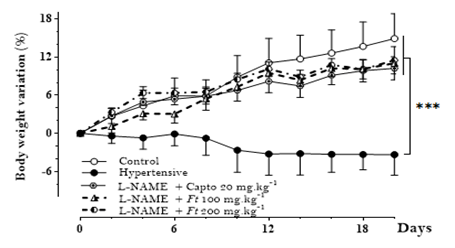
Figure 1: Effect of F. tessmannii (Ft) on body weight. Each point represents means ± sem, n = 5. Ft 100 and 200: Fagara tessmannii (100 and 200 mg.kg-1); capto 20: captopril 20 mg.kg-1; ***p < 0.001 as compared to the control group.
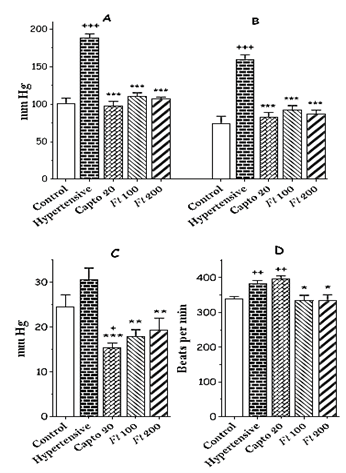
Figure 2: Effect of F. tessmannii on A) systolic blood pressure B) diastolic blood pressure C) pulse pressure and D) heart rate. Values are expressed as means ± sem, n = 5. Ft 100 and 200: Fagara tessmannii (100 and 200 mg.kg-1); Capto 20: captopril 20 mg.kg-1; +p < 0.05, ++p < 0.01 and +++p < 0.001 versus control; *p < 0.05, **p < 0.01 and ***p < 0.001 versus hypertensive (one-way ANOVA & Turkey’s posthoc test).
II Effect of Aqueous Extract of Fagara tessmannii on Hemodynamic Parameters
Figure 2 summarizes the effect of F. tessmannii aqueous extract on hemodynamic parameters. Administration of L-NAME resulted in hypertension in rats: it significantly brings up to 188.65±5.57 mm Hg vs 100.85±7.30 in the control group for systolic blood pressure (SBP);159.81±6.22 mm Hg vs 73.84±10.18 in the control group for diastolic blood pressure (DBP) and increased pulse pressure (24.46 %) and heart rate (13.17 %, p < 0.01). Treatment with F. tessmannii (100 and 200 mg.kg-1) significantly inhibited the increase in SBP to more than 89.28 % (p < 0.001) and DBP to more than 78.52 % (p < 0.001). Unlike captopril, the extract completely abolished the increase in heart rate and pulse pressure induced by L-NAME better, the extract lowered the pulse pressure by 26.81 % and 21.41 % respectively for the doses of 100 and 200 mg.kg-1 as compared to control rats.
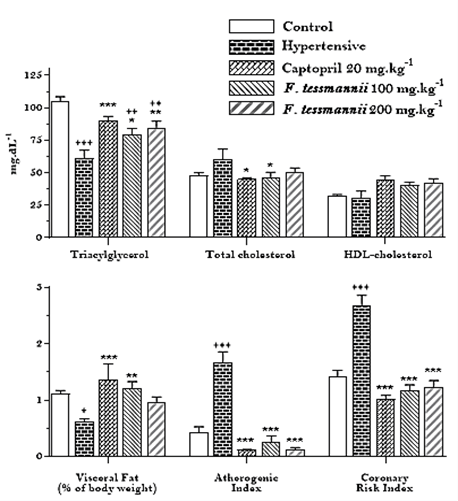
Figure 3: Effect of F. tessmannii on lipid profile. Each histogram represents mean ± sem, n = 5; F: Fagara; +p < 0.05, ++p < 0.01 and +++p < 0.001 as compared to control; *p < 0.05, **p < 0.01 and ***p < 0.001 as compared to L-NAME-induced hypertensive rats according to one-way ANOVA followed by Tukey Kramer’s posthoc test.
III Effect of Aqueous Extract of Fagara tessmannii on L-NAME-Induced Dyslipidemia
The administration of L-NAME for 21 days significantly decreased visceral fat and serum triglyceride levels in rats. An increase in serum total cholesterol, atherogenic index (p < 0.001), and coronary risk (p < 0.001) have been observed (Figure 3). The concomitant treatment with F. tessmannii extract prevented this L-NAME-induced fat and triglycerides lowering. Fagara extract had thwarted the increase of total cholesterol and enhanced HDL-cholesterol. Therefore, the extract (100 and 200 mg.kg-1) significantly reduced (p < 0.001) the increase of coronary risk and atherogenic index related to L-NAME administration.
IV Protective Effect of Fagara tessmannii on the Liver, Kidney, and Heart Damage
Rats receiving only L-NAME exhibited significantly increase serum levels of proteins, albumin and creatinine, and an increase of some enzyme activities especially γ-glutamyl transpeptidase, alanine transferase, alkaline phosphatase, and lactate dehydrogenase as compared to those receiving vehicle (control) (Table 1). These rises were significantly inhibited by Fagara tessmannii aqueous extract. Simultaneous treatment with F. tessmannii prevented the lactate dehydrogenase increase of 56,78 % (p < 0.01) and 55.98 % (p < 0.05), respectively at the doses of 100 and 200 mg.kg-1. F. tessmannii aqueous extract significantly inhibited the serum elevation of creatinine (p < 0.001), total proteins (p < 0.001), albumin (p < 0.001), and alanine aminotransferase (p < 0.05), γ-glutamyl transpeptidase (p < 0.05), and alkaline phosphatase activities (p < 0.05).
Table 1: Effect of F. tessmannii on hepatic, kidney and cardiac markers.
|
Parameters |
Groups |
||||||||||||||
|
Control |
Hypertensive |
Captopril (20 mg.kg-1) |
F. tessmannii (100 mg.kg-1) |
F. tessmannii (200 mg.kg-1) |
|||||||||||
|
Concentrations |
|||||||||||||||
|
Protein (mg. mL-1) |
62.38± |
5.17 |
90.67± |
7.01+++ |
44.63± |
1.66*** |
42.05± |
2.90+*** |
43.49± |
1.60+*** |
|||||
|
Albumin (mg. mL-1) |
35.89± |
3.79 |
63.92± |
8.36+++ |
32.48± |
0.54*** |
28.91± |
1.13*** |
26.97± |
0.50*** |
|||||
|
Creatinine (µmol. L-1) |
152.33± |
5.99 |
189.82± |
9.47++ |
132.43± |
2.75*** |
117.29± |
4.48+*** |
113.21± |
6.09++*** |
|||||
|
K+ (mmol. L-1) |
5.62± |
0.18 |
5.46± |
0.65 |
5.98± |
0.47 |
5.37± |
0.58 |
5.87± |
0.67 |
|||||
|
Na+ (mmol. L-1) |
97.00± |
5.76 |
110.00± |
0.67 |
92.05± |
5.25* |
118.80± |
6.38+ |
112.70± |
2.90 |
|||||
|
Activities (U.L-1) |
|||||||||||||||
|
Lactate Dehydrogenase |
524.6± |
104.7 |
1893.0± |
162.1+++ |
1215.1± |
131.6+* |
1116.0± |
117.6** |
1127.0± |
232.4* |
|||||
|
Aspartate aminotransferase |
32.82± |
2.74 |
36.42± |
3.55 |
27.11± |
4.29 |
25.21± |
2.15 |
30.88± |
3.19 |
|||||
|
Alanine aminotransferase |
15.71± |
5.70 |
36.34± |
6.04+ |
21.40± |
1.76* |
23.94± |
0.76** |
18.73± |
1.90* |
|||||
|
Ɣ-Glutamyl transpeptidase |
1.56± |
0.18 |
2.54± |
0.28+ |
1.14± |
0.23** |
1.27± |
0.26** |
1.48± |
0.08* |
|||||
|
Alkaline phosphatase |
19.50± |
3.46 |
36.34± |
2.81++ |
18.38± |
4.38** |
14.54± |
1.23** |
17.77± |
2.76** |
|||||
Each value represents mean ± sem, n = 5; F: Fagara; +p < 0.05, ++p < 0.01 and +++p < 0.001: as compared to control group; *p < 0.05, **p < 0.01 and ***p < 0.001: as compared to L - NAME - induced hypertensive rats according to one - way ANOVA followed by Tukey Kramer’s posthoc test.
V Effects of the Fagara extract on Oxidative Status
As shown in (Figure 4), the administration of the stem bark aqueous extract of Fagara tessmannii significantly attenuated the decrease in aortic levels of nitrites, catalase, and reduced glutathione. In the heart, the catalase activity was boosted by the extract. The plant also prevented in the aorta and delayed in the heart, the lipid peroxidation characterized by a low rate of thiobarbituric acid reactive substances (TBARS), malondialdehyde (MDA).
VI Effect of Aqueous Extract of Fagara tessmannii on L-NAME-induced Aortic and Coronary Arteries Remodeling
Figure 5 shows the effects of F. tessmannii on microarchitecture (A, B, C, D, E) and histomorphometry (F) of the aorta. Treatment with L-NAME induced a significant increase of thickness of the media (Figure 5B) (p < 0.001) as compared to control (Figure 5A). The plant extract (100 and 200 mg.kg-1) significantly inhibited (p < 0.001) this rising thickness (Figure 5F). The histology of the control coronary (Figure 5G) presents normal architecture while coronary of hypertensive rats shows vascular congestion and collagen accumulation in the adventitia. Furthermore, these collagen fibers infiltrate both media and intima (Figure 5H). F. tessmannii administration reduced the coronaries' congestion and prevented the collagen accumulation around and inside the coronaries (Figures 5J & 5K).
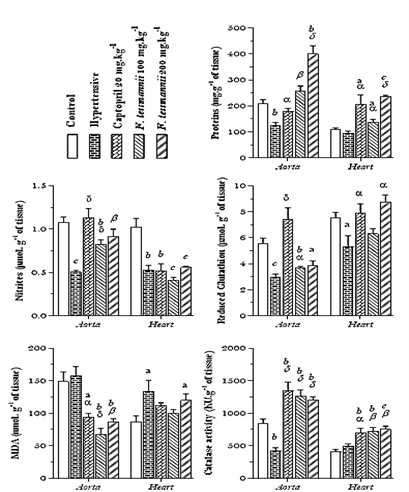
Figure 4: Effects of Fagara tessmannii on proteins and oxidative stress markers. Each value represents mean ± sem, n = 5; F: Fagara; ap < 0.05, bp < 0.01 and cp < 0.001: as compared to control group; αp < 0.05, βp < 0.01 and δp < 0.001: as compared to L-NAME-induced hypertensive rats according to one-way ANOVA followed by Tukey Kramer’s posthoc test.
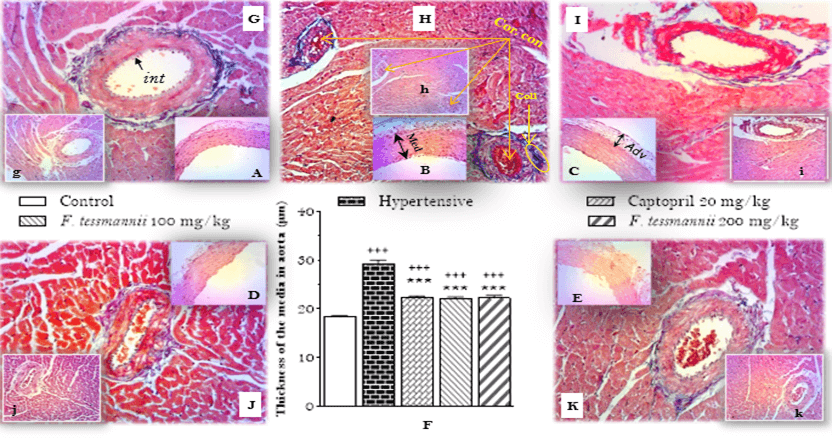
Figure 5: Effects of F. tessmannii on the (F) media thickness (A, B, C, D, E) aorta and coronary arteries fibrosis (G, H, I, J, K, g, h, i, j, k). hematoxylin & eosin (A, B, C, D, E, g, h, i, j, k) and Aniline blue/Fuchsine acid/Orange G (AFOG)-Trichrome (G, H, I, J, K) staining. Values are expressed as means ± sem, 9 ≤ n ≤ = 15. Adv: adventitia; Med: media; int: intima; Coll: collagen; Cor. con: coronary congestion. +++p < 0.001 versus control; ***p < 0.001 versus hypertensive (one-way ANOVA & Turkey’s post hoc test).
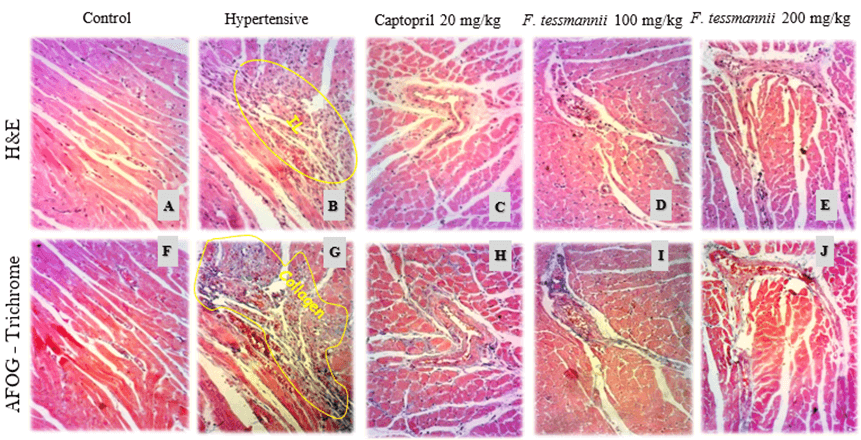
Figure 6: Histology of heart tissues performed by (A, B, C, D, E) hematoxylin & eosin (H & E) and (F, G, H, I, J) Aniline blue/Fuchsine acid/Orange G (AFOG)-Trichrome staining (100X magnification). IL: leucocytes infiltration.
VII Effect of Aqueous Extract of Fagara tessmannii on L-NAME-Induced Cardiac Inflammation and Fibrosis
A histopathological exam of the heart was performed by hematoxylin-eosin and AFOG-Trichrome staining (Figure 6). The histologic examination showed mainly inflammation (Figure 6B) and fibrosis (Figure 6G) in the cardiac muscle of the hypertensive group. No signs of inflammation or fibrosis were detected on groups treated with the F. tessmannii extract.
Discussion
Human essential hypertension is a complex multifactorial disease that is influenced by many factors. Experimental models mimicking hypertensive responses in humans allow research into the therapeutic management of human hypertension [30]. This study was conducted to assess whether F. tessmannii stem bark aqueous extract prevents L-NAME-induced essential hypertension and its associated atherogenic dyslipidemia and oxidative induced target organ damage. L-NAME administration for 21 days resulted in high systolic and diastolic BP. It is well known that long-term administration of NO synthase (NOS) inhibitor, L-NAME in relatively high doses induces so-called “NO-deficient hypertension” in normotensive rats, a widely model for better investigation of cardiovascular disorders [5, 31]. Chronic NOS inhibition results in an imbalance between contracting and relaxing factors due to decreased NO bioavailability or too oxidized NO, the accentuation of ET-1 effect, and inducing COX-2 expression [30, 32]. The consequent impaired NO bioavailability result in reduced endothelium-dependent vasorelaxation, leading to hypertension.
The stem bark aqueous extract of F. tessmannii at the doses of 100 and 200 mg.kg-1 significantly attenuated the rising of BP in rats simultaneously receiving L-NAME, suggesting that the NO pathway is involved in the antihypertensive effects of F. tessmannii. Increased peripheral resistance is the common feature found in both human and animal hypertension as a result of decreased NO bioavailability and/or increased secretion of contracting factors. Reducing this peripheral resistance will thus lead to a decrease in both systolic and diastolic BP [33]. Under these findings, it seems that the plant extract counters the impaired NO bioavailability and the occurrence of peripheral resistance. That can be confirmed by the conserved nitrites rate in vessels and the ameliorative state of PP which could testify the maintained vessel elasticity [34, 35]. Furthermore, BP's increase in NO-deficient hypertension involves stimulation of the sympathetic system tone and the renin-angiotensin system, the pathways with which the extract appears to interfere to abolish the increase of heart rate and BP observed in hypertensive rats [36]. These effects would result of the extract contented secondaries metabolites. Previous investigations highlighted the presence of alkaloids, terpenoids, saponins, mucilage, coumarin, and phenols compounds in the extract used in this work and provided an overview of the vasorelaxant effects of F. tessmannii [21].
Studies have shown that the administration of polyphenols induces a decrease in blood pressure, endogenous vasodilators increase, and vasoconstrictors decrease. These effects of polyphenols were associated with a greater increase in NOS activity in the cardiovascular system [37, 38]. Polyphenols and alkaloids increased antioxidant activity as catalase and reduced glutathione [39-42]. The antioxidant property of plant extract could result in a decrease of prostanoids and hypersensitivity to vasoconstrictors and the enhancement of NO availability, which may contribute to the blood pressure-lowering effect of F. tessmannii [18]. ROS generation can reduce endothelium-dependent vasodilatation by impairing NO bioavailability [43]. Phytochemicals can modulate the vascular autonomic function and promote potential redox benefits as tissue inflammation even when nitric oxide is decreased [44].
Dyslipidemia is a major risk factor of atherosclerosis and cardiovascular diseases. It had been proved NO involving in lipid metabolism through activation of hepatic sterol regulatory element-binding protein (SREBP)-2, step in cholesterol metabolism and expression of LDL receptor. LDL receptors induced the uptake of cholesterol into the hepatic cells aid to maintain the physiological cholesterol level [45]. NO deficiency lead to an increase in total cholesterol (TC), LDL, VLDL, and triglycerides (TG) levels, and decreased HDL concentration [46, 47]. Although triglycerides and visceral fat levels were low in this study, probably resulting from weight loss, an increase in TC and a decrease in HDL cholesterol were observed. Therefore, an increase in the total cholesterol/HDL-c ratio and LDL-c/HDL-c ratios. These ratios had been shown as the important components and good predictors for metabolic disturbances which include dyslipidemia, atherosclerosis, hypertension and cardiovascular diseases affecting carotid intima-media thickness and myocardial infarction. It is known that the increase in these ratios so-called coronary risk index (CRI) and atherogenic index (AI) is associated with an increased risk of sudden cardiac death [48, 49].
Fagara tessmannii enhanced the HDL-c while reducing the total cholesterol levels, atherogenic and coronary risk index. Seeing that two-thirds of plasma cholesterol are found in LDL, total cholesterol and LDL-c are closely correlated; meanwhile, an increase in HDL-c is frequently associated with plaque regression, while a decrease in LDL - c would slow down progression [29]. Furthermore, HDL-c has been presented as an independent protective risk factor for atherosclerotic CVDs and being used as therapeutic targets for the primary and secondary prevention of sudden cardiac deaths via its touchiness to oxidation and lowering BP [49, 50]. The plant extract, by managing lipidemia could prevent atherosclerosis results in essential hypertension.
In hypertension, the changes of vascular smooth muscle cells, growth/apoptosis, migration and differentiation, impaired production and degradation of extracellular matrix and stimulation of inflammatory responses result in structural remodeling [51]. Identification of plasma LDH activity, levels of NO and MDA in the thoracic aorta and heart allowed to investigate vascular remodeling [52]. Eleveted LDH activity that express the severity and the occurrence of complications in hypertension serves as an important marker because it can be detected at the first time in the oxidative stress process [53]. Our study shows that treatment with F. tessmanni extract diminished the LDH increase in the blood plasma and increased NO level in aorta. The antioxidant effects protect against lipid peroxidation due to reactive oxygen species (ROS), a fact observed with low rates of aortic and cardiac TBARS in groups treated with the extract [40, 41, 54].
It has been reported an increase in the activity of tissue and/or circulating levels of inflammatory cytokines such as interleukin-6, tumor necrosis factor-alpha and interleukin-1β and adhesion molecules during essential hypertension. Inflammatory cytokines play a pivotal role in the target organ fibrosis, by promoting the tissue infiltration of inflammatory cells such as macrophages and lymphocytes and a process of active proteolysis and re-synthesis of certain components like collagen and elastic fibers [55-58]. Histopathological examination showed arterial wall thickening, heart inflammation and fibrosis. The promotion of potential redox is a benefit to tissue inflammation in spite of NO deficiency [44]. Treatment with herbal remedies may alleviate oxidative stress and subsequently help manage hypertension-induced vascular remodeling. F. tessmanni, with its anti-inflammatory, and antioxidant functions inhibited coronary congestion and prevented heart fibrosis [18].
This experiment has shown that NOS blockage reaches to the decrease of weight gain, visceral fat, and serum triacylglycerols. Few studies have demonstrated that intraperitoneal administration of L-NAME significantly decreases hypothalamic NO content, inferring an inhibition of NOS, causing a reduction in energy intake and an increase in energy expenditure, hence they enhance weight loss, reduced visceral fats, and hypotriglyceridemia induced by L-NAME [59-61]. These facts would lead to muscular hypotrophy, autophagia, and proteolysis combined with oxidative stress result in a lot of degradation products. Fagara extract has considerably prevented the above-mentioned disorders while preserving heart, kidney, and hepatic functions by protecting to the proteolysis product, creatinine, ALT, γ-GT, and albumin.
In conclusion, the present study provides evidence that the stem bark aqueous extract of F. tessmannii prevents the L-NAME-induced essential hypertension, lipid profile disturbance. It seems obvious that the F. tessmannii extract could preferentially act in the endothelium-derived pathway and antioxidative activity to prevent functional cardiovascular changes produced by chronic inhibition of NO synthesis. Subsequent in vivo and in vitro studies will be necessary to elucidate these endothelial mechanisms.
Funding
None.
Author Contributions
Théophile Dimo: Experiments design, interpretation of results; Yannick Bekono Fouda, Esther Ngo Lemba Tom: Collecting materials, research methodology, statistical analysis, references; Bibi-Farouck Aboubakar Oumarou, Marie-Noël Tegah Kuissi: Hypertension induction, biochemical assays; Lohik Nguegang Mbolang, Paul Désiré Dzeufiet Djomeni: Histology.
Conflicts of Interest
None.
Abbreviations
F. tessmannii (Ft): Fagara tessmannii Extract
PP: Pulse Pressure
BP: Blood Pressure
L-NAME: NG -Nitro-L-Arginine -Methyl Ester
NO: Nitric Oxide
Article Info
Article Type
Research ArticlePublication history
Received: Thu 27, Aug 2020Accepted: Fri 11, Sep 2020
Published: Wed 30, Sep 2020
Copyright
© 2023 Théophile Dimo. This is an open-access article distributed under the terms of the Creative Commons Attribution License, which permits unrestricted use, distribution, and reproduction in any medium, provided the original author and source are credited. Hosting by Science Repository.DOI: 10.31487/j.JICOA.2020.05.07
Author Info
Corresponding Author
Théophile DimoDepartment of Animal Biology and Physiology, Laboratory of Animal Physiology, University of Yaoundé I, Yaoundé, Cameroon
Figures & Tables
Table 1: Effect of F. tessmannii on hepatic, kidney and cardiac markers.
|
Parameters |
Groups |
||||||||||||||
|
Control |
Hypertensive |
Captopril (20 mg.kg-1) |
F. tessmannii (100 mg.kg-1) |
F. tessmannii (200 mg.kg-1) |
|||||||||||
|
Concentrations |
|||||||||||||||
|
Protein (mg. mL-1) |
62.38± |
5.17 |
90.67± |
7.01+++ |
44.63± |
1.66*** |
42.05± |
2.90+*** |
43.49± |
1.60+*** |
|||||
|
Albumin (mg. mL-1) |
35.89± |
3.79 |
63.92± |
8.36+++ |
32.48± |
0.54*** |
28.91± |
1.13*** |
26.97± |
0.50*** |
|||||
|
Creatinine (µmol. L-1) |
152.33± |
5.99 |
189.82± |
9.47++ |
132.43± |
2.75*** |
117.29± |
4.48+*** |
113.21± |
6.09++*** |
|||||
|
K+ (mmol. L-1) |
5.62± |
0.18 |
5.46± |
0.65 |
5.98± |
0.47 |
5.37± |
0.58 |
5.87± |
0.67 |
|||||
|
Na+ (mmol. L-1) |
97.00± |
5.76 |
110.00± |
0.67 |
92.05± |
5.25* |
118.80± |
6.38+ |
112.70± |
2.90 |
|||||
|
Activities (U.L-1) |
|||||||||||||||
|
Lactate Dehydrogenase |
524.6± |
104.7 |
1893.0± |
162.1+++ |
1215.1± |
131.6+* |
1116.0± |
117.6** |
1127.0± |
232.4* |
|||||
|
Aspartate aminotransferase |
32.82± |
2.74 |
36.42± |
3.55 |
27.11± |
4.29 |
25.21± |
2.15 |
30.88± |
3.19 |
|||||
|
Alanine aminotransferase |
15.71± |
5.70 |
36.34± |
6.04+ |
21.40± |
1.76* |
23.94± |
0.76** |
18.73± |
1.90* |
|||||
|
Ɣ-Glutamyl transpeptidase |
1.56± |
0.18 |
2.54± |
0.28+ |
1.14± |
0.23** |
1.27± |
0.26** |
1.48± |
0.08* |
|||||
|
Alkaline phosphatase |
19.50± |
3.46 |
36.34± |
2.81++ |
18.38± |
4.38** |
14.54± |
1.23** |
17.77± |
2.76** |
|||||
Each value represents mean ± sem, n = 5; F: Fagara; +p < 0.05, ++p < 0.01 and +++p < 0.001: as compared to control group; *p < 0.05, **p < 0.01 and ***p < 0.001: as compared to L - NAME - induced hypertensive rats according to one - way ANOVA followed by Tukey Kramer’s posthoc test.
References
- WHO (2018) Noncommunicable diseases country profiles 2018. Geneva 224.
- Guangwen Ren, Liying Zhang, Xin Zhao, Guangwu Xu, Yingyu Zhang et al. (2008) Mesenchymal Stem Cell-Mediated Immunosuppression Occurs via Concerted Action of Chemokines and Nitric Oxide. Cell Stem Cell 2: 141-150. [Crossref]
- WHO (2015) World Health Statistics 2015. Geneva.
- Allen W Cowley Jr (2006) The genetic dissection of essential hypertension. Nat Rev Genet 7: 829-840. [Crossref]
- Iveta Bernatova (2014) Endothelial Dysfunction in Experimental Models of Arterial Hypertension: Cause or Consequence? BioMed Res Int 2014: 1-14.
- J Dananberg, R S Sider, R J Grekin (1993) Sustained hypertension induced by orally administered nitro-L-arginine. Hypertension 21: 359-363. [Crossref]
- Venkat Gopalakrishnan, Marcel Lebel, R Touyz, James van Huysse, George Fodor et al. (2006) Hypertension Canada. Société canadienne d’hypertension artérielle, STA HealthCare Communications inc. Pointe-Claire (Québec) 8.
- World Health Organization (2015) Health in 2015: from MDGs, Millenium Development Goals to SDGs, Sustainable Development Goals. Geneva.
- W Rosa (2017) Transforming Our World: The 2030 Agenda for Sustainable Development. A New Era in Global Health. Springer Publishing Company, New York.
- World Health Organization (2020) World Health Statistics 2020 visual summary.
- Mónica Alonso, Antonia Serrano, Margarita Vida, Ana Crespillo, Laura Hernandez Folgado et al. (2012) Anti-obesity efficacy of LH-21, a cannabinoid CB1 receptor antagonist with poor brain penetration, in diet-induced obese rats: LH-21 affects lipogenic proteins in adipose tissue. Br J Pharmacol 165: 2274-2291. [Crossref]
- Esther Ngo Lemba Tom, Florette Diane Nankia, Christophe Mezui, Nyemb Nyunaï, Yannick Fouda Bekono et al. (2018) Mechanisms of hypotensive action of Harungana madagascariensis (Hypericaceae) stem bark aqueous extract in rats. Int J Curr Adv Res 7: 10580-10584.
- Esther Ngo Lemba Tom, Justin Rodrigue Billong Mimb, Nyemb Nyunaї, Yannick Fouda Bekono, Frida Longo et al. (2018) Vasodilatory Effects of Aqueous Extract from Harungana madagascariensis Stem Bark in Isolated Rat Aorta: The Roles of Endothelium and K+ Channels. Am J Ethnomed 5.
- Danielle Claude Bilanda, Ronald À Goufani Bidingha, Paul Désiré Djomeni Dzeufiet, Yannick Bekono Fouda, Rodrigue Fifen Ngapout et al. (2020) Antihypertensive and antidiabetic activities of Erythrina senegalensis DC (Fabaceae) stem bark aqueous extract on diabetic hypertensive rats. J Ethnopharmacol 246: 112200. [Crossref]
- D Massoma Lembè, M Gasco, J Rubio, S Yucra, E Ngo Sock et al. (2011) Effect of the ethanolic extract from Fagara tessmannii on testicular function, sex reproductive organs and hormone level in adult male rats: Effect of Fagara tessmannii (Méliaceae) on sexual function. Andrologia 43: 139-144.
- MM Okeyo (2008) Zanthoxylum gilletii (De Wild.) P.G.Waterman. In:D Louppe, Amoako Oteng, A A & M Brink (Editors). PROTA (Plant Resources of Tropical Africa/Ressources végétales de l’Afrique tropicale), Wageningen, Netherlands.
- G Pachon, H Rasoanaivo, A Azqueta, J C Rakotozafy, A Raharisololalao et al. (2007) Anticancer Effect of a New Benzophenanthridine Isolated from Zanthoxylum madagascariense (Rutaceline). In Vivo 21: 417-422. [Crossref]
- Charlie Kenmoe Djeukeu, Ariane Kouam Kenmogne, Anatole Guy Blaise Azebaze, Philippe Belle Ebanda Kedi, Juliette Catherine Vardamides et al. (2019) A New Aromatic Amide from the Roots of Zanthoxylum tessmannii (Rutaceae). Chem Biodivers 16: e1800590. [Crossref]
- Guohong Yang, Daofeng Chen (2008) Alkaloids from the Roots of Zanthoxylum nitidum and Their Antiviral and Antifungal Effects. Chem Biodivers 5: 1718-1722. [Crossref]
- SK Adesina (2005) The Nigerian Zanthoxylum: chemical and biological values. Afr J Trad CAM 2: 282-301.
- Yannick Bekono Fouda, Esther Ngo Lemba Tom, Albert Donatien Atsamo, Christian Bonabe, Théophile Dimo (2020) Effects of stem bark aqueous extract of Fagara tessmannii Engl (Rutaceae) on cardiovascular risks related to monosodium glutamate-induced obesity in rat: In vivo and in vitro assessments. J Ethnopharmacol 260: 112972. [Crossref]
- Kamsiah Jaarin, Wai Dic Foong, Min Hui Yeoh, Zaman Yusoff Nik Kamarul, Haji Mohd Saad Qodriyah et al. (2015) Mechanisms of the antihypertensive effects of Nigella sativa oil in L-NAME-induced hypertensive rats. Clinics 70: 751-757. [Crossref]
- Orelien Sylvain Mtopi Bopda, Théophile Dimo, Télesphore Benoit Benoît Nguelefack, Paul Desire Djomeni Dzeufiet, S.V. Rakotonirina et al. (2007) Effects of Brillantaisia nitens lindau (acanthaceae) methylene chloride/methanol leaf extract on rat arterial blood pressure and heart rate. Pharmacologyonline 1: 495-510.
- P T Slack (1987) Analytical methods manual, 2nd edition. British Food Manufacturing Industries, Leatherhead.
- K M Wilbur, F Bernheim, O W Shapiro (1949) The thiobarbituric acid reagent as a test for the oxidation of unsaturated fatty acids by various agents. Arch Biochem 24: 305-313. [Crossref]
- A G Gornall, C J Bardawill, M M David (1949) Determination of serum proteins by means of the biuret reaction. J Biol Chem 177: 751-766. [Crossref]
- A K Sinha (1972) Colorimetric assay of catalase. Anal Biochem 47: 389-394. [Crossref]
- G L Ellman (1959) Tissue sulfhydryl groups. Arch Biochem Biophys 82: 70-77. [Crossref]
- Jesús Millán, Xavier Pintó, Anna Muñoz, Manuel Zúñiga, Joan RubiésPrat et al. (2009) Lipoprotein ratios: Physiological significance and clinical usefulness in cardiovascular prevention. Vasc Health Risk Manag 5: 757-765. [Crossref]
- Xin Fang Leong, Chun Yi Ng, Kamsiah Jaarin (2015) Animal Models in Cardiovascular Research: Hypertension and Atherosclerosis. BioMed Res Int 2015: 528757. [Crossref]
- Jana Kopincová, Angelika Púzserová, Iveta Bernátová (2012) L-NAME in the cardiovascular system - Nitric oxide synthase activator? Pharmacol Rep 64: 511-520. [Crossref]
- Daniela Salvemini, Sangwon F Kim, Vincenzo Mollace (2013) Reciprocal regulation of the nitric oxide and cyclooxygenase pathway in pathophysiology: relevance and clinical implications. Am J Physiol Regul Integr Comp Physiol 304: R473-R487. [Crossref]
- Elvine Pami Nguelefack Mbuyo, Alain Bertrand Dongmo, Télesphore Benoît Nguelefack, Albert Kamanyi, Pierre Kamtchouing et al. (2012) Endothelium/Nitric Oxide Mediates the Vasorelaxant and Antihypertensive Effects of the Aqueous Extract from the Stem Bark of Mammea africana Sabine (Guttiferae). Evid Based Compl Alternat Med 2012: 961741. [Crossref]
- Jochen Steppan, Viachaslau Barodka, Dan E Berkowitz, Daniel Nyhan (2011) Vascular Stiffness and Increased Pulse Pressure in the Aging Cardiovascular System. Cardiol Res Pract 2011: 263585. [Crossref]
- Xiaomei Guo, Xiao Lu, Junrong Yang, Ghassan S Kassab (2014) Increased aortic stiffness elevates pulse and mean pressure and compromises endothelial function in Wistar rats. Am J Physiol Heart Circ Physiol 307: H880-H887. [Crossref]
- Natalia Veronez da Cunha, Phileno Pinge Filho, Carolina Panis, Bruno Rodrigues Silva, Laena Pernomian et al. (2014) Decreased endothelial nitric oxide, systemic oxidative stress, and increased sympathetic modulation contribute to hypertension in obese rats. Am J Physiol Heart Circ Physiol 306: H1472-H1480. [Crossref]
- Iveta Bernátová, Olga Pechánová, Pavel Babál, Sona Kyselá, Svetoslav Stvrtina et al. (2002) Wine polyphenols improve cardiovascular remodeling and vascular function in NO-deficient hypertension. Am J Physiol Heart Circ Physiol 282: H942-H948. [Crossref]
- Cyril Auger, Mehdi Chaabi, Eric Anselm, Annelise Lobstein, Valérie B Schini Kerth (2010) The red wine extract-induced activation of endothelial nitric oxide synthase is mediated by a great variety of polyphenolic compounds. Mol Nutr Food Res 54: S171-S183. [Crossref]
- Marcos A A Medeiros, José F Pinho, Daysiane P De Lira, José M Barbosa Filho, Demetrius A M Araújo et al. (2011) Curine, a bisbenzylisoquinoline alkaloid, blocks L-type Ca2+ channels and decreases intracellular Ca2+ transients in A7r5 cells. Eur J Pharmacol 669: 100-107. [Crossref]
- Xin H Liu, Li L Pan, Yi Z Zhu (2012) Active chemical compounds of traditional Chinese medicine Herba Leonuri: implications for cardiovascular diseases: Herba Leonuri in cardiovascular diseases. Clin Exp Pharmacol Physiol 39: 274-282. [Crossref]
- Masoud Alasvand, Vahideh Assadollahi, Roberto Ambra, Ehsan Hedayati, Wesam Kooti et al. (2019) Antiangiogenic Effect of Alkaloids. Oxid Med Cell Longev 2019: 9475908. [Crossref]
- Hollie Speer, Nathan M D'Cunha, Michal Botek, Andrew J McKune, Domenico Sergi et al. (2019) The Effects of Dietary Polyphenols on Circulating Cardiovascular Disease Biomarkers and Iron Status: A Systematic Review. Nutr Metab Insights 12: 117863881988273. [Crossref]
- N S Lobato, F P Filgueira, E H Akamine, A P C Davel, L V Rossoni et al. (2011) Obesity induced by neonatal treatment with monosodium glutamate impairs microvascular reactivity in adult rats: Role of NO and prostanoids. Nutr Metab Cardiovasc Dis 21: 808-816. [Crossref]
- Denise Ruttke Dillenburg, Cristiano Mostarda, Ivana Cinthya Moraes Silva, Daiane Ferreira, Denielli da Silva Gonçalves Bós et al. (2013) Resveratrol and grape juice differentially ameliorate cardiovascular autonomic modulation in L-NAME-treated rats. Auton Neurosci 179: 9-13. [Crossref]
- Kazuki Noda, Shigeo Godo, Hiroki Saito, Masato Tsutsui, Hiroaki Shimokawa (2015) Opposing Roles of Nitric Oxide and Rho-Kinase in Lipid Metabolism in Mice. Tohoku J Exp Med 235: 171-183. [Crossref]
- Goudarz Sadeghi Hashjin, Mohaddeseh Abuhosseini, Siamak Asri Rezaei (2009) Role of nitric oxide in the plasma lipid profile in the rabbits. Arch Med Sc 5: 308-312.
- Esther Oluwasola Aluko, Temidayo Olutayo Omobowale, Ademola Adetokunbo Oyagbemi, Olumuyiwa Abiola Adejumobi, Temitayo Olabisi Ajibade et al. (2018) Reduction in nitric oxide bioavailability shifts serum lipid content towards atherogenic lipoprotein in rats. Biomed Pharmacother 101: 792-797. [Crossref]
- Ernst J Schaefer (2002) Lipoproteins, nutrition, and heart disease. Am J Clin Nutr 75: 191-212. [Crossref]
- Setor K Kunutsor, Francesco Zaccardi, Jouni Karppi, Sudhir Kurl, Jari A Laukkanen (2017) Is High Serum LDL/HDL Cholesterol Ratio an Emerging Risk Factor for Sudden Cardiac Death? Findings from the KIHD Study. J Atheroscler Thromb 24: 600-608. [Crossref]
- Ichiro Wakabayashi, Takashi Daimon (2019) Comparison of discrimination for cardio-metabolic risk by different cut-off values of the ratio of triglycerides to HDL cholesterol. Lipids Health Dis 18: 156. [Crossref]
- Rhian M Touyz (2005) Intracellular mechanisms involved in vascular remodelling of resistance arteries in hypertension: role of angiotensin II: Signalling and vascular remodelling. Exp Physiol 90: 449-455. [Crossref]
- Erna Sulistyowati, Ren Long Jan, Shu Fen Liou, Ying Fu Chen, Bin Nan Wu et al. (2019) Vasculoprotective effects of Centella asiatica, Justicia gendarussa and Imperata cylindrica decoction via the NOXs-ROS-NF-κB pathway in spontaneously hypertensive rats. J Tradit Complement Med 10: 378-388. [Crossref]
- Gregory J Kato, Vicki McGowan, Roberto F Machado, Jane A Little, James Taylor 6th et al. (2006) Lactate dehydrogenase as a biomarker of hemolysis-associated nitric oxide resistance, priapism, leg ulceration, pulmonary hypertension, and death in patients with sickle cell disease. Blood 107: 2279-2285. [Crossref]
- Ji Hoon Sung, Young Soo Jo, Su Jin Kim, Jeong Soo Ryu, Myung Chul Kim et al. (2013) Effect of lutein on L-NAME-induced hypertensive rats. Korean J Physiol Pharmacol 17: 339-345. [Crossref]
- Ahmed O Abdel Zaher, Hanan SM Farghaly, Abeer EM El Refaiy, Ahmed M Abd Eldayem (2020) Effect of hypercholesterolemia on hypertension-induced renal injury in rats: Insights in the possible mechanisms. J Cardiovasc Med Cardiol 7: 39-46.
- Ayodele Jacob Akinyemi, Gustavo Roberto Thomé, Vera Maria Morsch, Nathieli B Bottari, Jucimara Baldissarelli et al. (2016) Effect of Ginger and Turmeric Rhizomes on Inflammatory Cytokines Levels and Enzyme Activities of Cholinergic and Purinergic Systems in Hypertensive Rats. Planta Med 82: 612-620. [Crossref]
- Agostino Virdis, Umberto Dell'Agnello, Stefano Taddei (2014) Impact of inflammation on vascular disease in hypertension. Maturitas 78: 179-183. [Crossref]
- G H Gibbons, V J Dzau (1994) The Emerging Concept of Vascular Remodeling. N Engl J Med 330: 1431-1438. [Crossref]
- W R Drobyski, C A Keever, G A Hanson, T McAuliffe, O W Griffith (1994) Inhibition of nitric oxide production is associated with enhanced weight loss, decreased survival, and impaired alloengraftment in mice undergoing graft-versus-host disease after bone marrow transplantation. Blood. 84: 2363-2373. [Crossref]
- C J Sadler, J P H Wilding (2004) Reduced ventromedial hypothalamic neuronal nitric oxide synthase and increased sensitivity to NOS inhibition in dietary obese rats: further evidence of a role for nitric oxide in the regulation of energy balance. Brain Res 1016: 222-228. [Crossref]
- Hans Georg Joost, Matthias H Tschöp (2007) NO to Obesity: Does Nitric Oxide Regulate Fat Oxidation and Insulin Sensitivity? Endocrinology 148: 4545-4547. [Crossref]