
Factors Associated with Occult Adverse Pathologic Features in Prostate Cancer Patients Eligible for Active Surveillance
A B S T R A C T
Purpose: We examined factors associated with the presence of occult adverse pathologic features at prostatectomy in patients otherwise eligible for active surveillance.
Materials and Methods: Using the National Cancer Database, we identified all low and favorable-intermediate risk prostate cancer patients diagnosed from 2010-2016. The cohort was randomly divided into test and validation groups. Logistic regression was used to identify factors associated with adverse pathology at prostatectomy. Kaplan Meier analysis was used to determine overall survival difference in men with or without adverse pathology.
Results: Among 168,505 active surveillance eligible patients, 83,153 underwent radical prostatectomy. In men who received prostatectomy, the rate of occult adverse pathologic features defined as pT≥3b, Grade Group ≥ 4 or pN1 was exceedingly low (2.3-6.1%). The rate of adverse pathology was 15.85-35.1% when using a less restrictive definition (pT≥3a, Grade Group ≥ 3 or pN1). The number of positive biopsy cores was independently associated with an increased risk of adverse pathology (OR= 1.11, p<0.01). The absolute risk of adverse pathology remained low even at high positive core count. The AUC of the logistic model for prediction of adverse pathology improved with the addition of a number of positive biopsy cores to the NCCN criteria (0.610 to 0.649 in the test cohort and 0.638 in the validation cohort). 7-year overall survival was 93%, with no difference between patients with or without adverse pathologic features.
Conclusion: We identified pre-surgical factors associated with occult adverse pathology in active surveillance patients who underwent prostatectomy. This model may help select patients for additional risk stratification with genomic assays or multiparametric MRI prior to treatment decisions.
Keywords
Prostate cancer, active surveillance, upgrading, upstaging
Introduction
A major drawback of prostate cancer screening with serum prostate-specific antigen (PSA) is the vast over-detection of low-risk, clinically insignificant prostate cancer. Low-risk prostate cancer (LR-PC), defined by the National Comprehensive Cancer Network (NCCN) guidelines as Grade Group 1, PSA <10 ng/ml, and clinical stage T1-2a, is an indolent disease, highly unlikely to progress to metastasis or lead to prostate cancer specific mortality [1-4]. Active surveillance is the preferred treatment approach for patients with LR-PC due to equivalent survival compared to radical treatment while avoiding the adverse effects of treatment in the 60-85% of patients who do not progress to require definitive local therapy [5-8]. According to the NCCN guidelines, active surveillance is also an option for patients with favorable intermediate-risk prostate cancer (FIR-PC) defined as Grade Group 1-2, <50% biopsy cores positive, and one intermediate-risk factor (cT2b-T2c, PSA 10-20ng/ml or Grade Group 2-3) [1].
Although multiparametric prostate MRI and genomic biomarker assays have been increasingly incorporated into the treatment decision algorithm for active surveillance patients, it may not be cost-effective to employ these diagnostic tools in every patient [9-12]. Guidelines do not specify which patients should or should not receive testing with MRI or biomarker assay. Thus, there is a need for a risk stratification method that incorporates readily available clinical and biopsy data to identify patients who are most likely to benefit from the use of these costly adjunctive testing options.
In this study, we developed a logistic regression model to determine the association of pre-surgical factors with occult adverse pathologic features in active surveillance eligible men who underwent radical prostatectomy. We suggest that the individual risk of harboring occult adverse pathology determined by this model could be used to guide patient selection for additional diagnostic testing with genomic biomarker assays or multiparametric MRI.
Methods
I Data and Study Population
The National Cancer Database (NCDB) for prostate cancer was requested and obtained through an online system (Link). The NCDB utilizes registry data from over 1500 Commission on Cancer accredited facilities and includes more than 70% of newly diagnosed cancer cases nationwide. The database was queried for the years 2010 and 2016 to identify patients between age 45 to 90 years undergoing treatment for prostate cancer with following NCCN risk groups: 1) Low risk (LR-PC) – Grade Group 1, PSA <10 ng/ml, and clinical stage T1-2a; 2) Favorable intermediate risk (FIR-PC) - Grade Group 1-2, and biopsy core positivity <50%, and one intermediate-risk factor (cT2b-T2c, PSA 10-20ng/ml or Grade group 2-3). FIR-PC patients with Grade Group 1 (FIR-GG1) were analyzed separately from FIR-PC patients with Grade Group 2 (FIR-GG2).
Variables recorded included demographics (age, race, insurance, treatment center type and distance), clinical characteristics (Charlson-Deyo score, PSA level, core positivity, Grade Group and clinical T stage), and treatment strategy (active surveillance vs. surgery vs. radiation). The subcategory of patients who received prostatectomy as an initial treatment were further analyzed to identify adverse pathologic features at the time of surgery (≥GG3 in the final prostatectomy specimen, pathologic tumor stage ≥pT3, positive surgical margin, or positive pathologic lymph nodes). Patients with missing information and undefined treatment strategy were excluded from the final dataset.
II Statistical Analysis
The basic descriptive statistical analysis was initially performed. We analyzed trends in the treatment strategy for each risk category for the study duration. Adverse pathologic features were defined by either of two definitions based on pathologic findings in the prostatectomy specimen: 1) pT≥3b, Grade Group ≥ 4 or pN1, or 2) pT≥3a, Grade Group ≥ 3 or pN1. In the subcategory of patients who had surgery, the cohort was randomly divided into 2 groups for test and validation of the predictive model. Multivariate logistic regression models were generated to identify factors associated with adverse post-surgical pathologic features. Model covariates included NCCN risk factors (Grade Group, PSA and clinical T stage) in addition to a number of positive biopsy cores. All the analyses were performed using SAS 9.4 (SAS Inc., NC) at a 95% confidence level.
Results
We identified 168,505 men with low or favorable intermediate-risk prostate cancer of whom 106,620 had LR-PC and 61,885 had FIR-PC (10,248 FIR-GG1, 51,637 FIR-GG2). Table 1 defines the demographics, clinical characteristics and treatment strategy of the study population. Among 83,153 active surveillance eligible men who underwent radical prostatectomy as primary therapy, upgrading to ≥Grade Group 3 was present in 6% of LR-PC, 12% of FIR-GG1, and 16% of FIR-GG2 patients (Table 2). Upgrading to Grade group 4-5 at prostatectomy was rare (0.9-2%), as was seminal vesical invasion (pT3b) or pT4 disease (1.15%, 2.3% and 3.15% for LR-PC, FIR-GG1 and FIR-GG2 patients, respectively) (Table 2). Pelvic nodal metastasis was exceedingly uncommon (0.3-1%). Positive surgical margins were observed in 19-24% of patients.
Table 1: Demographics and clinical features stratified by treatment type.
|
Variables |
Active surveillance |
Surgery |
Radiation |
|
Median age, years (IQR) |
65 (59-70) |
61 (56-66) |
66 (61-70) |
|
Age, % (n) 45-55 55.1-65 65.1-75 >75 |
13% (4248) 41% (13739) 38% (12689) 8% (2531) |
23% (19331) 51% (42031) 25% (20831) 1% (960) |
9% (4549) 38% (19376) 44% (22367) 9% (4216) |
|
Race, % (n) White Black Other |
81% (26984) 14% (4513) 4% (1710) |
84% (70009) 12% (9978) 4% (3166) |
79% (39979) 17% (8839) 4% (1690) |
|
Charlson score, % (n) 0 1 2 >3 |
87% (28829) 10% (3410) 2% (661) 1% (307) |
83% (68769) 14% (12148) 2% (1714) 1% (522) |
84% (42334) 13% (6546) 2% (1164) 1% (464) |
|
Treatment center, % (n) Academic Cancer center (non-academic) Community practice |
54% (17964) 10% (3258) 36% (11985) |
44% (36814) 14% (11328) 42% (35011) |
33% (16550) 14% (7293) 53% (26665) |
|
Insurance, % (n) Medicare Medicaid Private Self |
44% (14141) 3% (1020) 51% (16413) 2% (702) |
30% (24097) 2% (1645) 67% (54348) 1% (910) |
52% (25042) 3% (1424) 44% (20998) 1% (593) |
|
Median Distance to treatment facility, miles (IQR) |
11 (5-26) |
14 (6-36) |
10 (5-22) |
|
NCCN risk, % (n)* LR-PC FIR-GG1 FIR-GG2 |
81% (27064) 9% (2716) 10% (3427) |
58% (49850) 7% (3922) 35% (29381) |
56% (28686) 8% (3397) 36% (18425) |
|
Median PSA, ng/ml (IQR) |
5.6 (4.4-7.3) |
5.2 (4.2-6.7) |
5.6 (4.5-7.3) |
|
Percent of positive cores, % (n) |
16 (8-25) |
25 (15-36) |
25 (16-33) |
*LR-PC: low risk prostate cancer; FIR-GG1: favorable intermediate risk, Grade Group 1; FIR-GG2: favorable intermediate risk, Grade Group 2.
Table 2: Adverse pathologic features in patients who underwent surgery as initial treatment for prostate cancer.
|
Adverse pathologic features |
Clinical risk classification |
|
||
|
LR-PC % (n) |
FIR-GG1 % (n) |
FIR-GG2 % (n) |
p-value |
|
|
Grade Group 3 |
5.1% (2293) |
10% (335) |
14% (3858) |
<.01 |
|
Grade Group 4 or 5 |
0.9% (437) |
2% (88) |
2% (704) |
<.01 |
|
pT3a |
8.4% (4161) |
12.7% (497) |
14.9% (4364) |
<.01 |
|
pT3b |
1.1% (548) |
2.2% (86) |
3.1% (921) |
<.01 |
|
pT4 |
0.05% (27) |
0.12% (5) |
0.05% (14) |
<.01 |
|
Pathologic nodal metastasis |
0.3% (83) |
0.6% (14) |
1% (207) |
<.01 |
|
Positive margin |
19% (9294) |
24% (912) |
20% (5894) |
<.01 |
In addition to factors already incorporated into the NCCN risk classification system (Grade Group, PSA and cT stage), the number of positive biopsy cores was independently associated with risk of adverse pathologic features at prostatectomy defined as pT≥3b, Grade Group ≥ 4 or pN1 (OR= 1.11, p<0.01 per each additional core) (Table 3) (Figure 1). The addition of a number of positive cores to NCCN risk classification increased the AUC of the logistic regression model for the probability of adverse pathologic features from 0.610 to 0.649 in the test cohort and 0.638 in the validation cohort. At a mean follow-up of 91 months, there was no difference in OS between patients with or without adverse pathologic features, with 7-year overall survival of 93% in both groups.
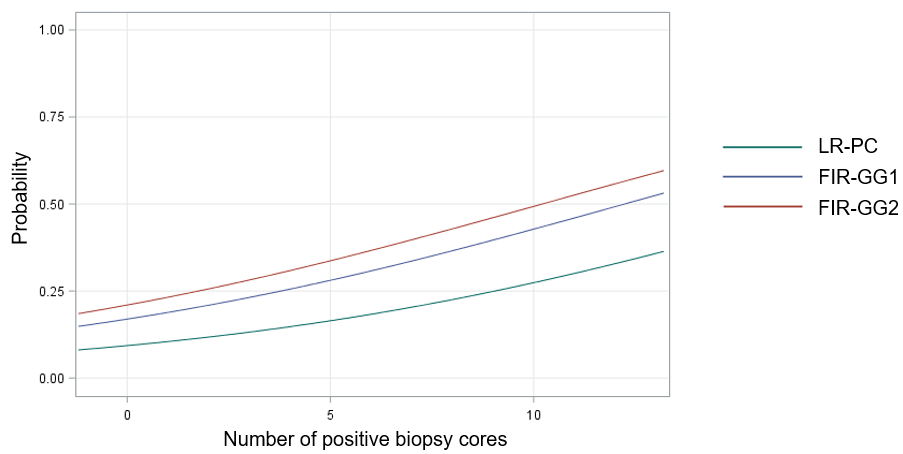
Figure 1: Probability of adverse pathologic findings defined as Grade group ≥3, pT≥3a, pN1 according to number of positive biopsy cores in patients who had prostatectomy.
Low risk: LR-PC; favorable intermediate risk and Grade Group 1: FIR-GG1; favorable intermediate risk and Grade Group 2: FIR-GG2.
Table 3: Multivariable analysis of pre-surgical clinical factors associated with adverse pathologic features (Grade Group ≥3, pT≥3, pN+) in patients who had prostatectomy as initial treatment for prostate cancer.
|
|
|
Odds Ratio (95% CI) |
|
|
Variables |
LR-PC |
FIR-GG1 |
FIR-GG2 |
|
Age, years 45-55 55.1-65 65.1-75 >75 |
REF 1.36 (1.27-1.46) 1.61 (1.49-1.74) 0.82 (0.59-1.13) |
REF 1.0 (0.81-1.23) 0.95 (0.76-1.2) 0.25 (0.11-0.59) |
REF 1.3 (1.21-1.4) 1.5 (1.38-1.62) 0.73 (0.57-0.93) |
|
Race White Black |
REF 1.04 (0.95-1.12) |
REF 0.94 (0.75-1.18) |
REF 0.87 (0.8-0.95) |
|
Charlson score 0 1 2 ≥3 |
REF 1.11 (1.03-1.19) 1.19 (0.99-1.43) 1.34 (0.97-1.85) |
REF 1.22 (0.99-1.51) 1.03 (0.61-1.72) 2.05 (1.03-4.11) |
REF 1.06 (0.98-1.13) 0.97 (0.81-1.15) 1.19 (0.89-1.57) |
|
Clinical T stage cT1 cT2 |
REF 1.17 (1.06-1.28) |
REF 1.02 (0.75-1.39) |
REF 1.38 (1.28-1.5) |
|
PSA, ng/ml |
1.14 (1.12-1.15) |
1.06 (1.03-1.09) |
1.11 (1.09-1.12) |
|
Number of positive cores ≤2 3-5 ≥6 |
REF 1.67 (1.57-1.77) 2.38 (2.21-2.55) |
REF 1.63 (1.39-1.92) 2.09 (1.33-3.3) |
REF 1.27 (1.2-1.34) 1.5 (1.34-1.68) |
Discussion
Active surveillance for localized prostate cancer achieves equivalent long-term survival compared to immediate radical intervention while avoiding the significant urinary, bowel, and sexual adverse effects of radical treatment in the 60-85% of patients who do not progress to need intervention [5-8]. Active surveillance in the Prostate Testing for Cancer and Treatment (ProtecT) trial was as effective as radical surgery or radiation for clinically localized prostate cancer, achieving 99% disease-specific survival at 10-years [5]. Similarly, the Prostate Cancer Intervention versus Observation Trial (PIVOT) found no significant difference in prostate cancer or all-cause mortality for patients with clinically localized prostate cancer randomized to surgery or observation [8]. Despite a steady increase in active surveillance utilization in the United States since 2010, immediate radical treatment (surgery or radiation) remains a common treatment approach for LR-PC and FIR-PC patients.
An interplay of many factors drives the decision for definitive treatment in patients otherwise eligible for active surveillance. Patient age, comorbidities and perceived risk of harboring occult high-risk disease missed on biopsy are known to impact treatment decisions. Genomic biomarker assays or multiparametric MRI are often employed to identify patients who are at the highest risk of harboring occult adverse pathology and instigate early treatment for these patients [9, 10, 12]. We demonstrated low absolute rates of adverse pathology in LR-PC and FIR-PC patients, which suggests that performing advanced imaging or biomarker tests does not benefit the majority of patients. Thus, screening every LR-PC and FIR-PC patient with a genomic biomarker or MRI is inefficient and a cost burden, particularly considering the vast number of patients diagnosed with localized prostate cancer yearly.
The low rate of adverse pathologic features for LR-PC and FIR-PC patients in our study is consistent with prior studies. Our finding that patients with FIR-GG1 have similar rates of upstaging and upgrading compared to those with LR-PC is consistent with the finding of Yang et al., who reported a 25.5% rate of upgrading or upstaging in a cohort of 2807 men with FIR-GG1 who underwent radical prostatectomy [13]. An earlier Swedish cohort had reported a 33-45% adverse pathology rate for Gleason 6 patients undergoing prostatectomy; however, this cohort included a higher proportion of patients with cT2 disease [14]. The 35% rate of upstaging or upgrading in the FIR-GG2 patients in our cohort is higher than that reported by Patel et al.; however, when restricted to the same definition (GG3, pT3b, pN1) the rate of adverse features is approximately 20% in both studies [15].
In addition to clinical variables already incorporated into the NCCN risk classification system (Grade Group, PSA and cT stage), we demonstrated that the number of positive cores was independently associated with the risk of adverse pathology (Table 3) (Figures 1 & 2). The prognostic importance of the number of positive cores was recently highlighted by Bryant et al. who demonstrated that a higher number of positive cores was associated with disease progression in men on active monitoring in the ProtecT study [16]. In our study, the addition of positive cores to NCCN criteria resulted in a modest improvement of the AUC for the logistic regression model for the prediction of adverse pathology.
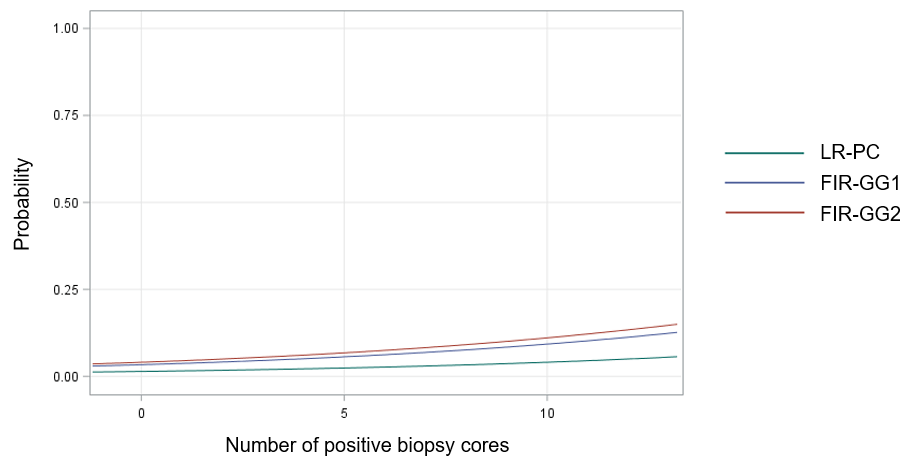
Figure 2: Probability of adverse pathologic findings defined as Grade group ≥4, pT≥3b, pN1 according to number of positive biopsy cores in patients who had prostatectomy.
Low risk: LR-PC; favorable intermediate risk and Grade Group 1: FIR-GG1; favorable intermediate risk and Grade Group 2: FIR-GG2.
The strengths of this study include the high generalizability of the findings given that the NCDB includes 70% of all cancers diagnosed in the United States. Limitations include the associated biases with retrospective data collection and the lack of disease-specific outcome measures such as biochemical recurrence or metastasis. The percent of cancer involvement per positive core, a known prognostic factor in prostate cancer, was not available. Further, adverse pathologic features may not necessarily lead to changes in overall survival in LR-PC and FIR-PC patients. In light of the long natural history of prostate cancer, the determination of overall survival in this study is limited by short follow up.
Conclusion
Given the high incidence of localized prostate cancer and the low absolute rate of occult adverse pathologic features, administering additional advanced testing such as multiparametric MRI or genomic biomarker tests to all active surveillance eligible patients is not efficient. The individual risk of harboring occult adverse pathology determined by the proposed model could be used to guide patient selection for additional diagnostic testing with genomic biomarker assays or multiparametric MRI. Further studies are required to establish the cutoff values for the model-determined probability of adverse pathology that is associated with abnormal findings on MRI or biomarker assay.
Funding
None.
Conflicts of Interest
None.
Article Info
Article Type
Research ArticlePublication history
Received: Fri 01, May 2020Accepted: Thu 14, May 2020
Published: Thu 21, May 2020
Copyright
© 2023 Ahmed Haddad. This is an open-access article distributed under the terms of the Creative Commons Attribution License, which permits unrestricted use, distribution, and reproduction in any medium, provided the original author and source are credited. Hosting by Science Repository.DOI: 10.31487/j.COR.2020.05.08
Figures & Tables
Table 1: Demographics and clinical features stratified by treatment type.
|
Variables |
Active surveillance |
Surgery |
Radiation |
|
Median age, years (IQR) |
65 (59-70) |
61 (56-66) |
66 (61-70) |
|
Age, % (n) 45-55 55.1-65 65.1-75 >75 |
13% (4248) 41% (13739) 38% (12689) 8% (2531) |
23% (19331) 51% (42031) 25% (20831) 1% (960) |
9% (4549) 38% (19376) 44% (22367) 9% (4216) |
|
Race, % (n) White Black Other |
81% (26984) 14% (4513) 4% (1710) |
84% (70009) 12% (9978) 4% (3166) |
79% (39979) 17% (8839) 4% (1690) |
|
Charlson score, % (n) 0 1 2 >3 |
87% (28829) 10% (3410) 2% (661) 1% (307) |
83% (68769) 14% (12148) 2% (1714) 1% (522) |
84% (42334) 13% (6546) 2% (1164) 1% (464) |
|
Treatment center, % (n) Academic Cancer center (non-academic) Community practice |
54% (17964) 10% (3258) 36% (11985) |
44% (36814) 14% (11328) 42% (35011) |
33% (16550) 14% (7293) 53% (26665) |
|
Insurance, % (n) Medicare Medicaid Private Self |
44% (14141) 3% (1020) 51% (16413) 2% (702) |
30% (24097) 2% (1645) 67% (54348) 1% (910) |
52% (25042) 3% (1424) 44% (20998) 1% (593) |
|
Median Distance to treatment facility, miles (IQR) |
11 (5-26) |
14 (6-36) |
10 (5-22) |
|
NCCN risk, % (n)* LR-PC FIR-GG1 FIR-GG2 |
81% (27064) 9% (2716) 10% (3427) |
58% (49850) 7% (3922) 35% (29381) |
56% (28686) 8% (3397) 36% (18425) |
|
Median PSA, ng/ml (IQR) |
5.6 (4.4-7.3) |
5.2 (4.2-6.7) |
5.6 (4.5-7.3) |
|
Percent of positive cores, % (n) |
16 (8-25) |
25 (15-36) |
25 (16-33) |
*LR-PC: low risk prostate cancer; FIR-GG1: favorable intermediate risk, Grade Group 1; FIR-GG2: favorable intermediate risk, Grade Group 2.
Table 2: Adverse pathologic features in patients who underwent surgery as initial treatment for prostate cancer.
|
Adverse pathologic features |
Clinical risk classification |
|
||
|
LR-PC % (n) |
FIR-GG1 % (n) |
FIR-GG2 % (n) |
p-value |
|
|
Grade Group 3 |
5.1% (2293) |
10% (335) |
14% (3858) |
<.01 |
|
Grade Group 4 or 5 |
0.9% (437) |
2% (88) |
2% (704) |
<.01 |
|
pT3a |
8.4% (4161) |
12.7% (497) |
14.9% (4364) |
<.01 |
|
pT3b |
1.1% (548) |
2.2% (86) |
3.1% (921) |
<.01 |
|
pT4 |
0.05% (27) |
0.12% (5) |
0.05% (14) |
<.01 |
|
Pathologic nodal metastasis |
0.3% (83) |
0.6% (14) |
1% (207) |
<.01 |
|
Positive margin |
19% (9294) |
24% (912) |
20% (5894) |
<.01 |
Table 3: Multivariable analysis of pre-surgical clinical factors associated with adverse pathologic features (Grade Group ≥3, pT≥3, pN+) in patients who had prostatectomy as initial treatment for prostate cancer.
|
|
|
Odds Ratio (95% CI) |
|
|
Variables |
LR-PC |
FIR-GG1 |
FIR-GG2 |
|
Age, years 45-55 55.1-65 65.1-75 >75 |
REF 1.36 (1.27-1.46) 1.61 (1.49-1.74) 0.82 (0.59-1.13) |
REF 1.0 (0.81-1.23) 0.95 (0.76-1.2) 0.25 (0.11-0.59) |
REF 1.3 (1.21-1.4) 1.5 (1.38-1.62) 0.73 (0.57-0.93) |
|
Race White Black |
REF 1.04 (0.95-1.12) |
REF 0.94 (0.75-1.18) |
REF 0.87 (0.8-0.95) |
|
Charlson score 0 1 2 ≥3 |
REF 1.11 (1.03-1.19) 1.19 (0.99-1.43) 1.34 (0.97-1.85) |
REF 1.22 (0.99-1.51) 1.03 (0.61-1.72) 2.05 (1.03-4.11) |
REF 1.06 (0.98-1.13) 0.97 (0.81-1.15) 1.19 (0.89-1.57) |
|
Clinical T stage cT1 cT2 |
REF 1.17 (1.06-1.28) |
REF 1.02 (0.75-1.39) |
REF 1.38 (1.28-1.5) |
|
PSA, ng/ml |
1.14 (1.12-1.15) |
1.06 (1.03-1.09) |
1.11 (1.09-1.12) |
|
Number of positive cores ≤2 3-5 ≥6 |
REF 1.67 (1.57-1.77) 2.38 (2.21-2.55) |
REF 1.63 (1.39-1.92) 2.09 (1.33-3.3) |
REF 1.27 (1.2-1.34) 1.5 (1.34-1.68) |
Low risk: LR-PC; favorable intermediate risk and Grade Group 1: FIR-GG1; favorable intermediate risk and Grade Group 2: FIR-GG2.
Low risk: LR-PC; favorable intermediate risk and Grade Group 1: FIR-GG1; favorable intermediate risk and Grade Group 2: FIR-GG2.
References
- National Comprehensive Cancer Network (2019) NCCN Clinical Practice Guidelines in Oncology (NCCN Guidelines®) Prostate Cancer. Version 4.
- Ross HM, Kryvenko ON, Cowan JE, Simko JP, Wheeler TM et al. (2012) Do adenocarcinomas of the prostate with Gleason score (GS) </=6 have the potential to metastasize to lymph nodes? Am J Surg Pathol 36: 1346-1352. [Crossref]
- Ibrahim Kulac, Michael C. Haffner, Srinivasan Yegnasubramanian, Jonathan I Epstein, Angelo M De Marzo (2015) Should Gleason 6 be labeled as cancer? Current opinion in urology 25: 238-245. [Crossref]
- Lu-Yao GL, Yao SL (1997) Population-based study of long-term survival in patients with clinically localised prostate cancer. Lancet 349: 906-910. [Crossref]
- Hamdy FC, Donovan JL, Lane JA, Mason M, Metcalfe C et al. (2016) 10-Year Outcomes after Monitoring, Surgery, or Radiotherapy for Localized Prostate Cancer. N Engl J Med 375: 1415-1424. [Crossref]
- Klotz L, Vesprini D, Sethukavalan P, Jethava V, Zhang L et al. (2015) Long-term follow-up of a large active surveillance cohort of patients with prostate cancer. J Clin Oncol 33: 272-277. [Crossref]
- Tosoian JJ, Mamawala M, Epstein JI, Landis P, Wolf S et al. (2015) Intermediate and Longer-Term Outcomes from a Prospective Active-Surveillance Program for Favorable-Risk Prostate Cancer. J Clin Oncol 33: 3379-3385. [Crossref]
- Wilt TJ, Jones KM, Barry MJ, Andriole GL, Culkin D et al. (2017) Follow-up of Prostatectomy versus Observation for Early Prostate Cancer. N Engl J Med 377: 132-142. [Crossref]
- Kasivisvanathan V, Rannikko AS, Borghi M, Valeria P, Lance AM et al. (2018) MRI-Targeted or Standard Biopsy for Prostate-Cancer Diagnosis. N Engl J Med 378: 1767-1777.
- Ahmed HU, El-Shater Bosaily A, Brown LC, Gabe R, Kaplan R et al. (2017) Diagnostic accuracy of multi-parametric MRI and TRUS biopsy in prostate cancer (PROMIS): a paired validating confirmatory study. Lancet 389: 815-822. [Crossref]
- Hendriks RJ, van Oort IM, Schalken JA (2017) Blood-based and urinary prostate cancer biomarkers: a review and comparison of novel biomarkers for detection and treatment decisions. Prostate Cancer Prostatic Dis 20: 12-19. [Crossref]
- Sathianathen NJ, Konety BR, Alarid-Escudero F, Lawrentschuk N, Bolton DM et al. (2019) Cost-effectiveness Analysis of Active Surveillance Strategies for Men with Low-risk Prostate Cancer. Eur Urol 75: 910-917. [Crossref]
- Yang DD, Mahal BA, Muralidhar V, Vastola ME, Boldbaatar N et al. (2018) Pathologic Outcomes of Gleason 6 Favorable Intermediate-Risk Prostate Cancer Treated With Radical Prostatectomy: Implications for Active Surveillance. Clin Genitourin Cancer 16: 226-234. [Crossref]
- Vellekoop A, Loeb S, Folkvaljon Y, Stattin P (2014) Population based study of predictors of adverse pathology among candidates for active surveillance with Gleason 6 prostate cancer. J Urol 191: 350-357. [Crossref]
- Patel HD, Gupta M, Tosoian JJ, Carter HB, Partin AW et al. (2018) Subtyping the Risk of Intermediate Risk Prostate Cancer for Active Surveillance Based on Adverse Pathology at Radical Prostatectomy. J Urol 200: 1068-1074. [Crossref]
- Bryant RJ, Oxley J, Young GJ, Lane JA, Metcalfe C et al. (2020) The ProtecT trial: analysis of the patient cohort, baseline risk stratification and disease progression. BJU int 125: 506-514 [Crossref]